- The Quench Report
- Posts
- The World Cup's Expected Impact on Beer - Quench Report Issue #24
The World Cup's Expected Impact on Beer - Quench Report Issue #24
Plus Recent History of Domestic Table Wine, Meet Prime Shake, Hot Jobs and more

Matt Rice
January 20, 2026
Welcome to Issue #24 of The Quench Report, the newsletter that raises a glass and delivers the latest and greatest in Beverage Alcohol and the broader Beverage category.
What’s on tap for today:
🍺 The World Cup’s Expected Impact on Beer
🥃 The Recent History of Domestic Table Wine
🆕 Meet Prime Shake
🔥 Hot Jobs Worth Applying To
🍺 HOW THE WORLD CUP HAS HISTORICALLY IMPACTED BEER
Will the 2026 World Cup Actually Sell More Beer? (Spoiler: It's Complicated)
People seem to think the World Cup is going to send beer sales through the roof. Not so fast my friend. We decided to actually check what has happened historically. Here's what we did: We dug into two recent World Cups of note:
1994 (the last time the U.S. hosted)
2014 (Brazil, gave us the best sales data to work with in a time zone similar region)
The "Please Manage Your Expectations" Part:
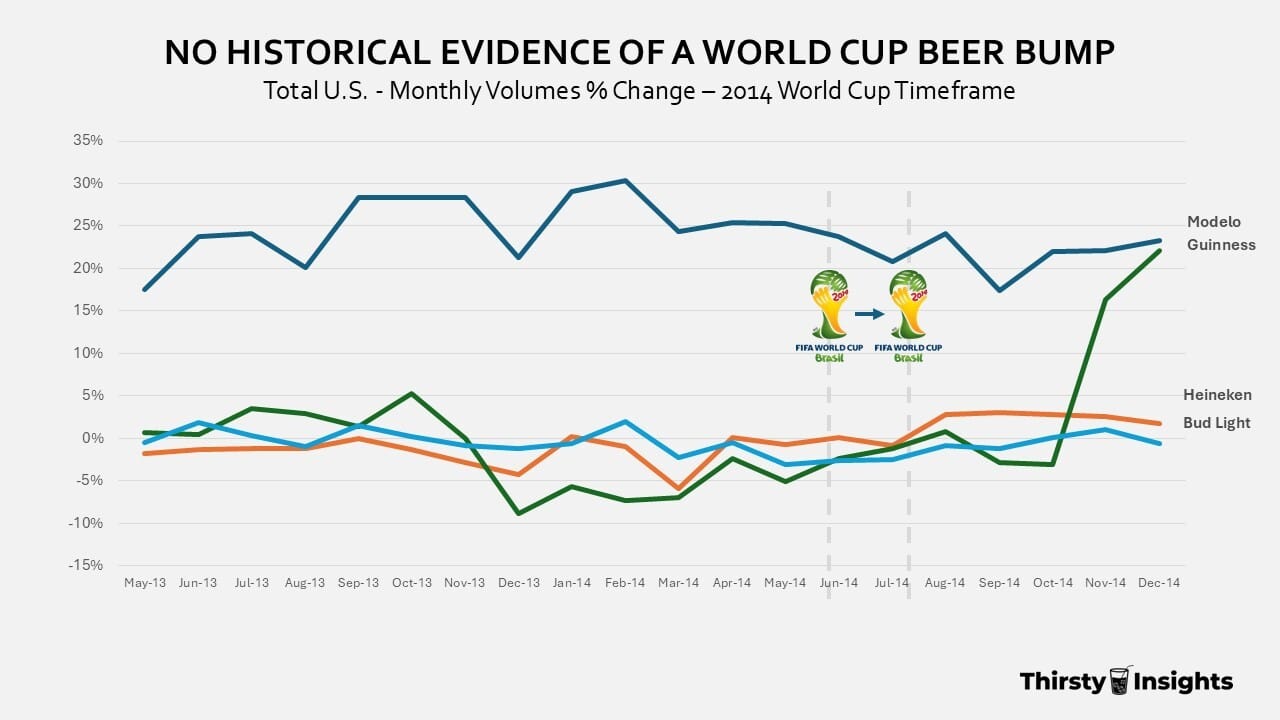
When we looked at grocery store and retail scan data from 2014, we found... basically nothing.
Bud Light? Modelo? Heineken? None showed any “bump” of note vs trends before or after the World Cup. Check it out for yourself 👇️
But wait, there's a Plot Twist:
Bars and restaurants in 1994 host cities saw consumption explode by up to 300% during group stage match months.
The problem? Most of that action happens in places we can't easily track, your local sports bar, and those independent convenience stores that sell a ton of imported beer.
A few things have changed since 1994:
The U.S. Hispanic population has doubled (10% → 20%)
The U.S. is hosting 78 matches instead of 56 (even with sharing with
Our data tracking is way better now, we have much better coverage of convenience stores and independent retailers
🧠Our Prediction:
Import brands will outperform domestic. Scan data will show more lift versus both 1994 and 2014, but a significant portion of the benefit will remain "hidden" until the major public companies report earnings. We're not expecting a sales explosion, but the World Cup should provide a much-needed tailwind this summer.
🍷 DOMESTIC TABLE WINE CATEGORY OVER TIME - HERE COMES BOTA BOX!
The domestic table wine category has transformed dramatically over the past decade. Let's break down what's changed 👇️

🧠Our Thoughts
Premiumization - A decade ago, the volume leaders were all value-priced brands (sub-$5/750ml equivalent), predominantly sold in large box formats (3L or 5L). Fast forward to today: premium players like Josh Cellars and Apothic now rank among the top volume brands in the U.S., alongside elevated box wine offerings. Just like the broader Bev Alc landscape, premiumization has reshaped table wine.
Barefoot Reign Ending? - Here's a striking data point: Barefoot is down over 3 million cases from its peak seven years ago. If current trends hold, both Bota Box and Black Box could overtake Barefoot in volume within the next decade. That's a market shift almost nobody would have predicted just a few years ago.
🆕 MEET PRIME SHAKE
Remember when Prime was the hottest brand in CPG? When kids treated restocks like a PS5 drop during launch year? Those days feel like ancient history, the brand has faced significant headwinds and declining trends over the past few years. But the team isn't standing still. They're betting on innovation to spark a turnaround.
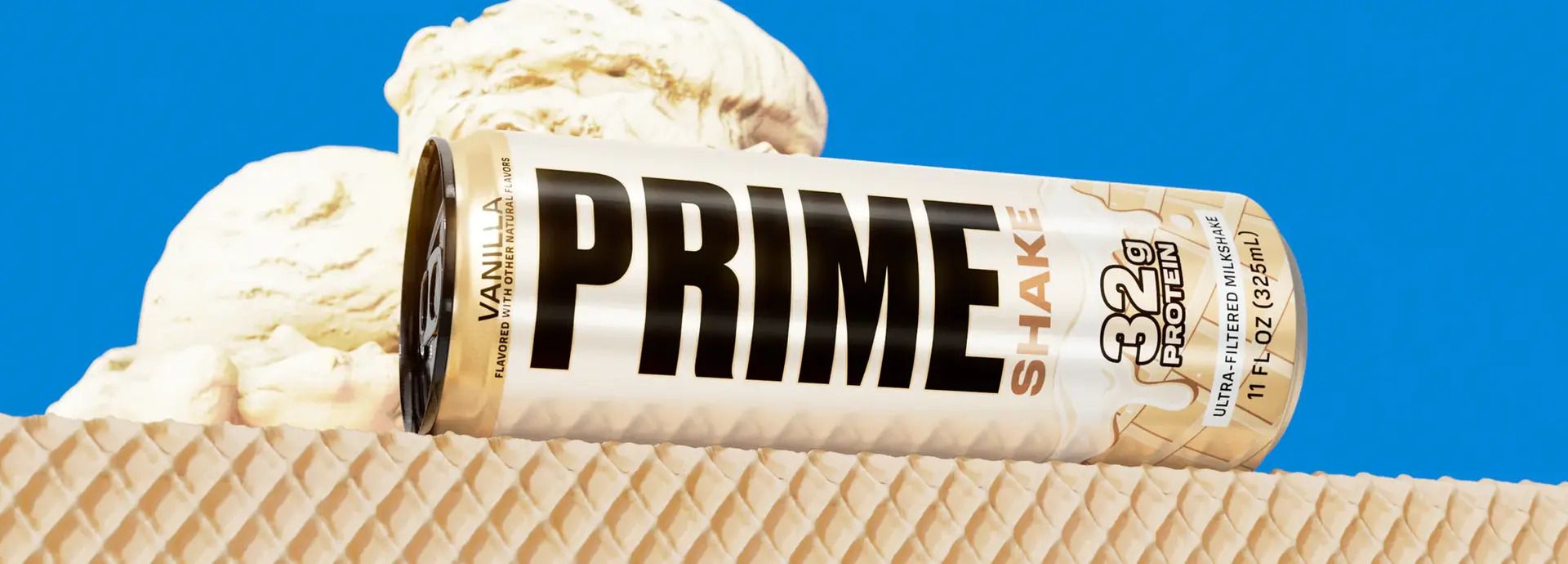
The newest innovation for Prime … meet Prime Shake 👇️
The details:
Three launch flavors - Vanilla, Chocolate, and Cookies and Cream
All have 32g of Protein
160 calories per can
Low sugar - only 3g
Lactose-Free / Gluten-Free
🧠Our Thoughts
Design - The packaging is very well done - in our opinion much stronger than the vast majority of competitors in the space.
The Problem - Our biggest concern? Launching this under the Prime umbrella. Prime has been heavily discounted for years and has lost its premium, trendy positioning. We believe this innovation would have had a much stronger shot at success as a standalone brand with fresh equity, rather than inheriting the baggage of its parent brand's recent struggles.
THIS WEEK’S HOT JOBS IN BEVERAGES
These roles came to us via personal recommendations (not public job boards). Want your open role featured? Email: [email protected] 👇️
NAM West - Project Zero - Remote West Coast
State Manager - Kobrand - Las Vegas, NV
Sr. Associate Brand Manager - RTD - Sazerac - Atlanta, GA
Craft / Import Brand Manager - Pepin - Tampa, Florida
Program Manager - NTW - Sazerac - Remote
THANKS FOR READING
The Quench Report is a free weekly newsletter from Thirsty Insights, a beverage alcohol consulting company that serves top clients in strategy, insights, and analytics.
Any questions, please email us at [email protected]